Learn how hydroelectric dams work step by step. From reservoir to generator, see how moving water is turned into electricity with clear explanations and diagrams.
A hydroelectric dam looks like a simple wall holding back a river. But inside, a lot of clever engineering turns falling water into electricity. The process uses gravity, water pressure, spinning blades, and electromagnets. Here is a step-by-step tour of how it all works.
Everything starts with the reservoir. This is the lake behind the dam. Water collects here from rain, snowmelt, and the river itself.
The reservoir has two jobs. First, it stores water so the plant can make electricity whenever it is needed. Second, the height of the water gives it potential energy. The higher the water sits above the turbine, the more energy it has.
Think of it like a ball on a shelf. The higher the shelf, the more energy the ball has when it falls. Same with water. More height means more power.
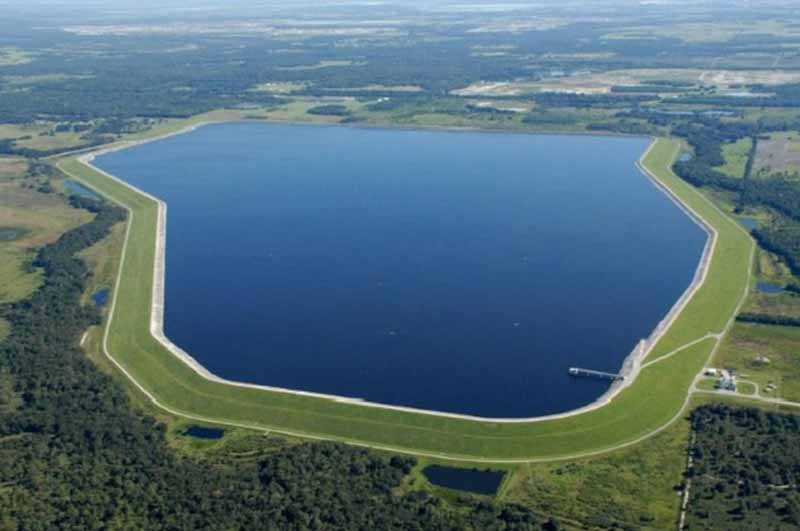
The dam is the wall that holds everything back. It has to be strong enough to hold millions of tons of water.
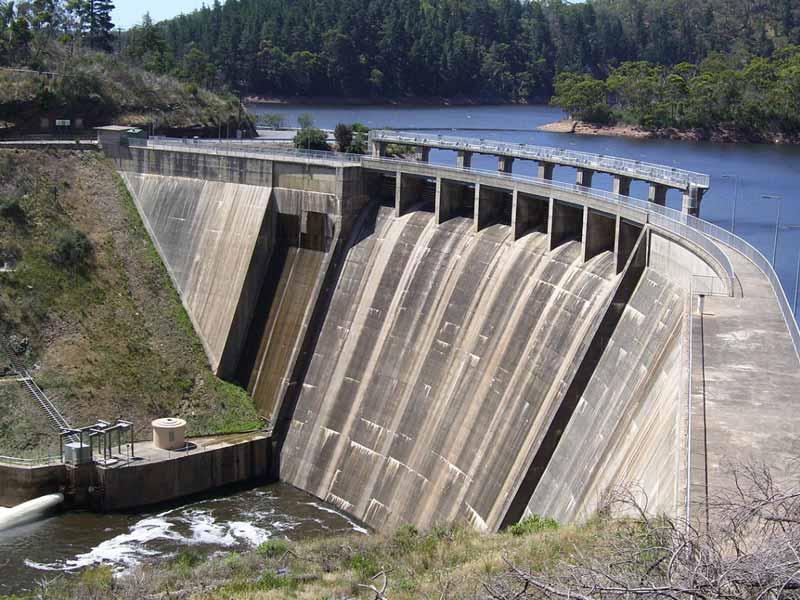
There are different types of dams. Gravity dams are thick and use their own weight to hold back water. Arch dams are curved and transfer the force into the canyon walls. Buttress dams use triangular supports.
The most common type for large hydro projects is the concrete gravity dam. It is simple, strong, and lasts a very long time.
Dams need a way to release extra water safely. That is what spillways are for. They act like emergency exits for water.
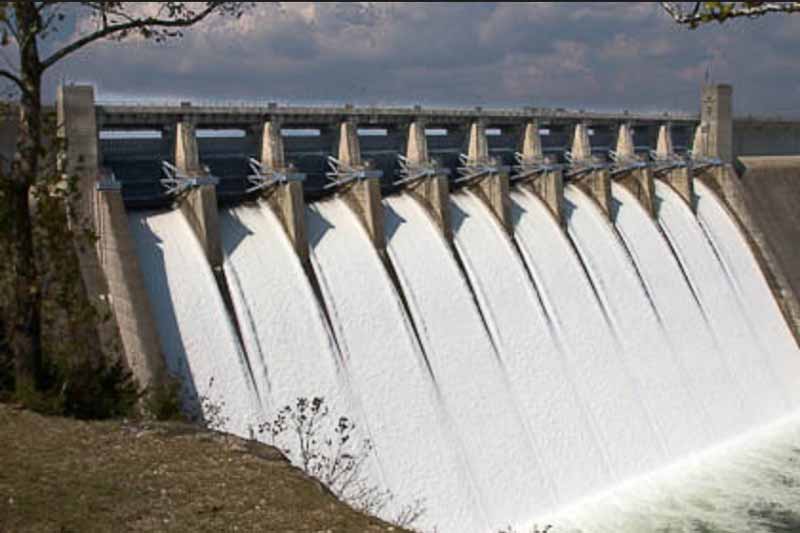
When heavy rain or snowmelt fills the reservoir too much, operators open the spillway gates. Water flows down a chute and lands in the river below. This prevents the dam from being overtopped, which could damage it or cause a disaster.
Deep inside the dam, there are large gates called control gates or intake gates. These are the on-off switch for the power plant.
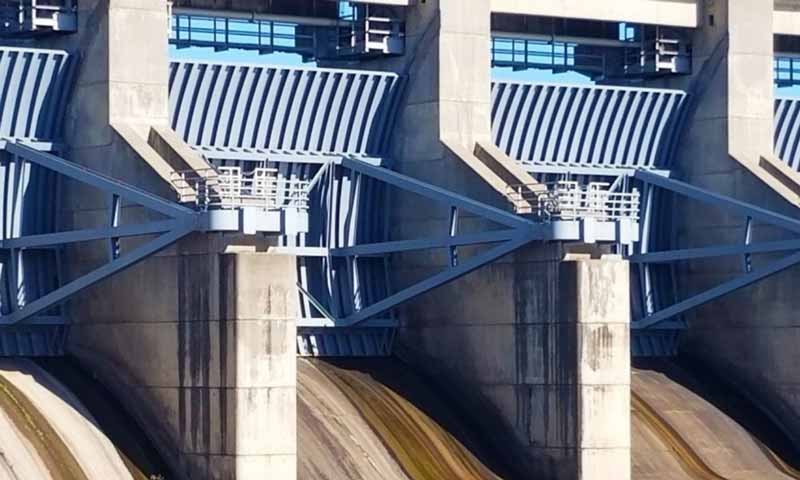
When electricity is needed, the gates open. Water flows from the reservoir into the penstock. When demand drops, the gates close. It is very fast. A hydro plant can go from zero to full power in about 90 seconds.
The penstock is a large pipe that carries water from the reservoir down to the turbine. It is like a giant straw.
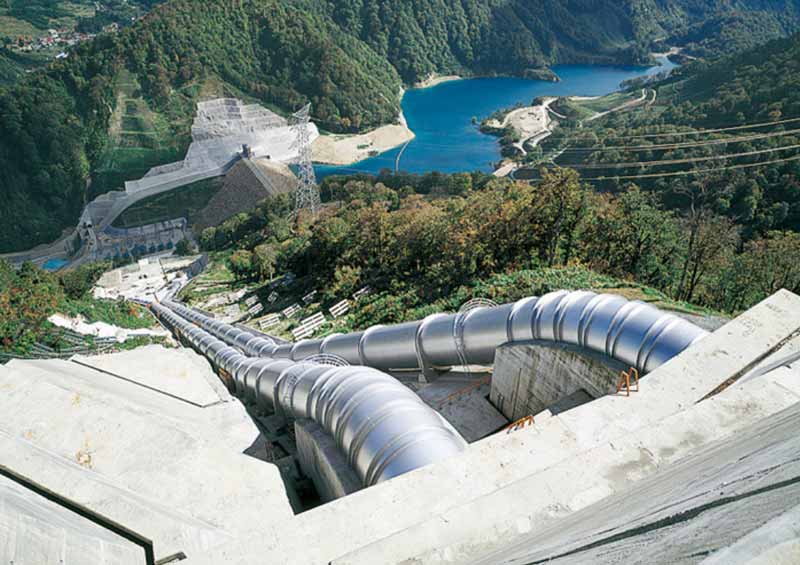
The penstock does two things. It directs the water flow, and it increases the water pressure. As the water travels down the steep pipe, gravity speeds it up. By the time it reaches the turbine, the water is moving very fast and under high pressure.
The penstock is built to handle extreme forces. Some penstocks are over 10 meters in diameter. They are made of thick steel or reinforced concrete.
This is where falling water becomes spinning motion. The high-pressure water shoots onto the blades of the turbine.
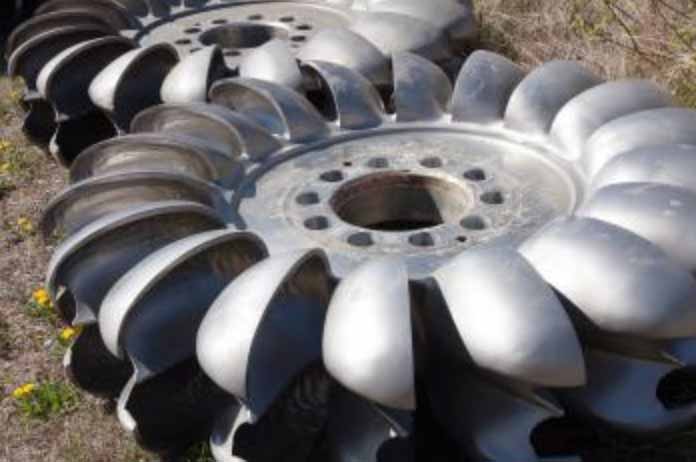
Most large dams use Francis turbines. Water enters the turbine housing from the side. It hits curved blades called runners. The runners redirect the water and spin the shaft.
In high-mountain areas with steep drops but less water, engineers use Pelton wheels. A nozzle shoots a jet of water at bucket-shaped blades. The water pushes the wheel around.
In slow, large rivers, Kaplan turbines work best. They look like boat propellers. The blade angles can adjust while the turbine runs, making them efficient at different flow rates.
The spinning turbine shaft is connected to a generator. This is where mechanical energy becomes electrical energy.
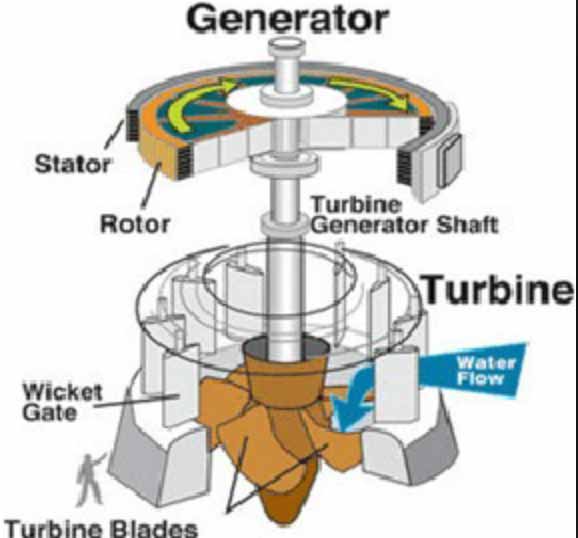
Inside the generator, the shaft rotates a set of magnets. The magnets spin past copper coils. This creates a changing magnetic field. The changing field pushes electrons in the copper wire. That push is electricity.
After the water passes through the turbine, it flows out through the tailrace. The tailrace carries the water back to the river downstream.
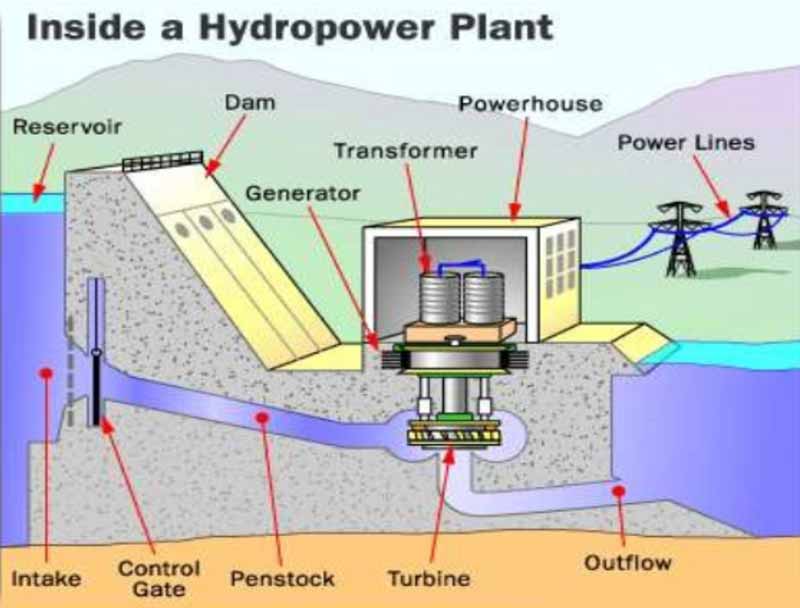
The water is not used up. It just continues its journey downstream. The same water can be used again by another dam further down the river.
Think of a hydro dam like a big bathtub with a drain. The bathtub is the reservoir. The drain is the penstock. When you pull the plug, water rushes down the drain.
Now imagine the drain has a pinwheel inside it. The rushing water spins the pinwheel. That spinning pinwheel is connected to a machine that makes light.
That is all a hydro dam is. A big tub of water with a pinwheel in the drain.
The power output of a hydro plant depends on two variables: flow rate and head.
Flow rate is the volume of water passing through the turbine per second, measured in cubic meters per second. Head is the height difference between the water surface in the reservoir and the turbine, measured in meters.
The formula for power is simple: Power = flow rate x head x gravity x efficiency.
A large dam might have a flow rate of 1,000 cubic meters per second and a head of 100 meters. With 90% efficiency, that produces about 880 megawatts. Enough to power 700,000 homes.
Turbine efficiency is remarkably high. Francis turbines achieve 90-95% efficiency. That means almost all the energy in the water is captured. Compare that to solar panels at 20% or wind turbines at 45%.
Common misconceptions:
Discussion questions:
Last updated: September 14, 2026
1. What carries water from the reservoir to the turbine?
2. What does the turbine do in a hydro plant?
3. What is the function of a spillway?
4. Which component controls the flow of water into the penstock?
5. What type of energy does water have as it flows down the penstock?
How does a hydroelectric dam work?
Water stored behind a dam flows through pipes called penstocks. The flowing water spins a turbine. The turbine turns a generator. The generator produces electricity.
What is a penstock?
A penstock is a large pipe that carries water from the reservoir to the turbine. It controls the flow and pressure of water hitting the turbine blades.
What is a Francis turbine?
A Francis turbine is the most common type used in hydro plants. Water enters the turbine from the side and pushes curved blades, making the shaft spin.
How does a generator make electricity?
The spinning turbine shaft rotates magnets inside copper coils. This creates a changing magnetic field that pushes electrons and generates electricity.
What happens to the water after it goes through the turbine?
The water flows out through a tailrace and returns to the river downstream. It is not used up. It just continues its natural journey.